

The Austin Housing Miracle Isn’t Exactly What It Seems
Demand for Austin plummeted to a historic low driving down rents lower than what supply could deliver on its own.
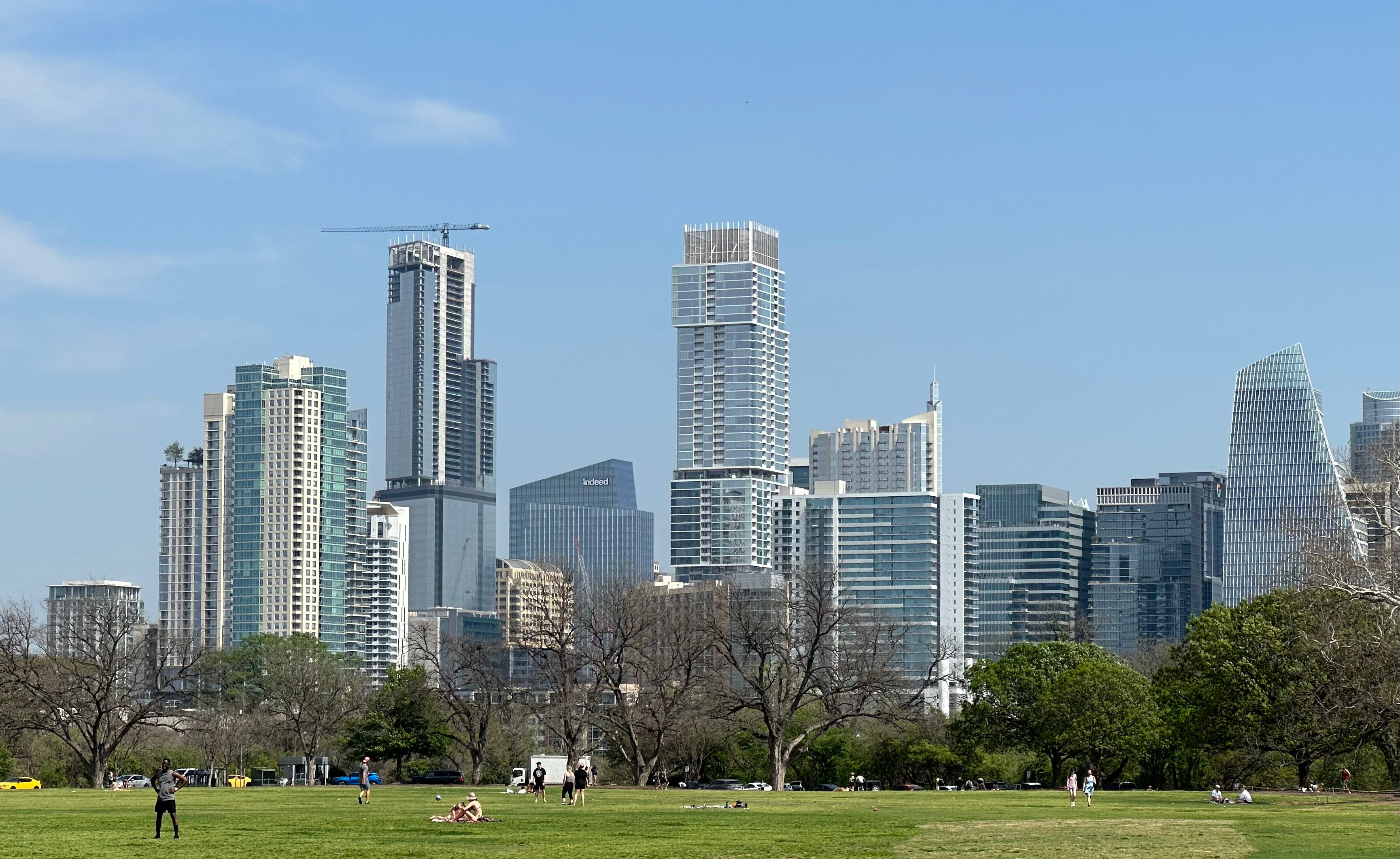
Austin rents fell by as much as 20 percent from their 2021 peak, and almost overnight the city was canonized as proof that supply alone can tame housing costs. But Austin’s housing story was never just about supply. Such a dramatic outlier should invite observers to ask why rents collapsed particularly at a time when deep concerns among YIMBYs over Austin’s penchant for restrictive zoning laws was seen as a major impediment during and after the COVID era.
Before COVID, Austin was already one of the fastest-growing metros in the United States. Domestic migration averaged over 33,000 people a year over the 2010s, and jumped to over 48,000 in 2020. During the previous decade, the metro added over 350,000 net new migrants, a jump of 16 percent of its population in 2019. For over a decade Austin was attracting people at an unusually high rate.
Then came the pandemic-era boom, when the city’s growth story seemed to move from strong to unstoppable. Remote work, tech expansion, migration into the Sun Belt, and the city’s cultural pull created the sense that Austin could be on a one-way path toward ever-higher demand and ever-higher housing costs. That fear was not irrational. By 2022, the Austin Chamber reported that the metro grew by over 60,000 people in a single year, especially in the neighboring high-demand suburban Williamson and Hays counties. The politics of supply were shaped by exactly that atmosphere. Mayor Steve Adler had been making that warning for years, saying in 2017 that without housing reform Austin could “end up like San Francisco,” with no real middle in the market.
So developers and policymakers responded to a real signal. Austin built at extraordinary scale. From 2021 through 2025, the metro authorized about 190,000 housing units—roughly 93,000 single-family homes and 98,000 units in structures with two or more units—so the supply surge was broader than apartments alone. The apartment wave, though, was especially large: developers delivered about 32,000 apartment units in 2024 and another 17,000 in 2025.
But supply is only half the story.
The other half is that year-over-year population-growth demand in Austin tanked just as developers were rushing to deliver housing planned around the assumption that the pandemic-era boom would continue. By 2023–2024, domestic migration into the metro had dropped to its lowest year-over-year annual growth rate in over 70 years. But low demand is not zero demand which is why absorption, the rate at which vacant apartments become occupied, doesn’t explain the dynamic at play as supply-siders may think. They might say apartment demand could not have weakened much because absorption remained high. But achieved demand is demand achieved at the new lower price. If landlords have to substantially cut asking rents, offer six to eight weeks free, or pile on concessions to fill new units, then strong leasing does not prove that demand remained strong enough to support prior price levels. Austin ended 2025 with rents down 4.3 percent year over year with more than 20,000 units of net absorption. Those facts are not at odds with one another. Dallas Fed reported last month that concessions remain widespread in Texas and are especially prevalent in Austin, where they are expected to continue through mid-2026 despite “healthy demand fundamentals.” In plain English, yes, a lot of units got leased; but they got leased in a market that had to reprice.
What the Austin case demonstrates is that large additions to housing supply can push rents down but that supply alone cannot produce dramatic affordability gains. The latest data show Austin’s apartment pipeline under construction was down 34 percent annually. Developers may build until housing is affordable, but they are not drafting plans to oversupply a market out of the goodness of their hearts.
Austin’s story points to a broader but still practical lesson in the housing debate. Supply matters, and cities have good reasons to pursue growth. But growth comes at a price. Where change happens, what it looks like, how fast it comes, and what it does to a community’s feel all matter too. Any town or city’s present arrangement is what attracts people more than what it can become. Where policy technocrats are wedded to the future, the broader public is to the present. Austin is useful precisely because it shows both sides of that reality at once: abundant building can relieve price pressure, but the resulting city is shaped not only by how much gets built, but by timing, demand, and the local tradeoffs growth brings with it.
That is why Austin should not be treated as a universal housing parable. There is no single urban value to maximize, whether it is affordability, growth, preservation, or efficiency. Cities have to balance opportunity and continuity, acceleration and preservation, expansion and cohesion. Austinites, like residents anywhere else, are not wrong to care both about affordability and about the kind of city they are building. The real challenge is managing change without pretending tradeoffs can be wished away.
It’s also worth keeping in mind that national data is all but worthless in aiming to have a mature understanding of the housing market — because there are actually many dozen housing markets and rates are consequently highly localized. A few metros on the western and eastern coasts of the union account for much of the so-called “national” housing shortage when viewed on a continental lens. Yet many other metros face a mix of strapped supply, particularly in cities like Atlanta, where large institutional investors own tens of thousands of homes at a time when homeownership has become more difficult.
The “Austin Miracle” is a more contingent case where a market built for one level of growth then had to compete harder for tenants when that growth normalized. The broader housing issue is hyper-local and constantly changing and the metros said to face the worst shortages today may not look the same in years or even months. Austin’s rent drop is good news for renters like myself, but it is not an accurate expectation of what supply alone can regularly achieve. It is a reminder that housing markets move on both sides of the ledger, and in the case of the Texas capital, a freak case of supply and demand heading in opposite directions that nobody saw coming five years ago.

As a (former) Austin resident - I’m curious: much of the city’s growth surge was dependent on tech job relocation from blue states (CA, WA) - with massive relocation and new jobs from Apple, Tesla, Amazon, Google, etc.
What of all that new over-capacity when those tech jobs now migrate to “Claude in the Cloud”?
If rents are falling from over-supply NOW - before the great tech-job gutting - what might Austin housing look like if 30%+ tech jobs are eliminated from terra firma? 😳